
A cryptocurrency wallet is a tool that allows you to store, receive, and send cryptocurrency. Unlike a traditional wallet, it doesn’t hold physical money. Instead, it interacts with the blockchain—a digital ledger where all transactions are recorded.
A crypto wallet manages two encryption keys: a public key and a private key. The public key is your wallet address, to which cryptocurrency can be sent (similar to an email address). The private key confirms your right to manage the assets stored at that address. It is used only when creating a transaction: it performs the digital signature. The authenticity of this signature is verified using the public key—this ensures that the transaction was initiated by you, and not by someone else (who doesn’t have your secret part of the key).
Rating of Crypto Wallets in 2025, According to Our Top Experts
Types of Crypto Wallets
It’s impossible to use cryptocurrency without a crypto wallet—it is the foundation of any financial activity in the blockchain world.
Crypto wallets are divided into several types. The main principle of their classification is the method of key storage and access. Some options are connected to the internet, providing quick access to funds; others store keys in an isolated environment and prioritize security. Additionally, wallets can differ in the level of control a user has over their assets.

Hot Wallets
Constantly or regularly connected to the internet. This makes them convenient for frequent transactions but less secure for long-term storage of large amounts.
Web Wallets
Operate through a browser and are accessible from any internet-connected device. All data is stored on the service’s side, not on the user’s device. This is convenient, especially for beginners, but the security of such crypto wallets depends on the reliability of the platform providing them. Direct control over keys is usually unavailable in this case, and lacking control over keys means you only indirectly control your cryptocurrency.
Mobile Wallets
Installed as apps on smartphones. They offer quick access to funds and are often integrated with QR scanners, making them convenient for in-store payments or peer-to-peer transfers. However, security depends on the wallet app’s architecture (internal design), the phone’s own security, and whether keys and their backups are encrypted.
Cold Wallets
Not connected to the internet or only connected during a transaction. They are designed for long-term storage and minimizing theft risks.
Software Wallets
This category includes standard crypto wallets used in offline mode. For example, you can install a wallet on a computer and then disconnect it from the network. This approach protects against online threats but requires technical literacy and strict adherence to security rules to avoid accidentally losing access.
Hardware Wallets
These are physical devices, often resembling a standard USB flash drive. They store private keys internally and never transmit them to the internet. Transactions are signed inside the device and then broadcast to the network.
Even if the computer connected to the crypto wallet is infected, the key remains secure. This is one of the most reliable ways to store cryptocurrency.
Review of Crypto Wallets and Choosing the Best in Europe
Custodial vs. Non-Custodial Wallets
A custodial crypto wallet is one in which your funds are effectively controlled by a third party. Examples include crypto exchanges or online services where you register and trust the platform to store your keys. This is convenient, but you don’t have full control: if your account is blocked or the platform is hacked, you could lose access to your funds. Let’s repeat: if you don’t control your keys, you don’t control your coins.
A non-custodial wallet, on the other hand, gives you full control over your private key. Only you have access to your cryptocurrencies, and no one can manage them without your permission. This requires greater responsibility: if you lose your key or fail to back it up, recovering access will be impossible.
Selection Criteria
The Best Crypto Wallets with Card Protection and Free Installation
Choosing a crypto wallet is an important step that affects the security, convenience, and cost-effectiveness of working with cryptocurrency. Depending on your goals, you may have different requirements for a wallet, but there are basic criteria worth considering in any case.
Security
Security is perhaps the main factor when choosing a crypto wallet. This isn’t just about protection from external threats, but also about who controls access to your assets. A good wallet should provide reliable encryption, store keys in an isolated environment, and allow for backup creation.
It’s also excellent if your chosen option supports recovery via a seed phrase. It’s important to understand how authorization works, where exactly private keys are stored, and what happens if the device is lost or compromised. The more aspects a user controls themselves, the higher the level of responsibility—but with the right approach, security is significantly enhanced.
Multi-Currency Support and Exchange Integration
If you work with multiple cryptocurrencies, it’s important that your wallet supports all of them. Some solutions are limited to major coins like Bitcoin or Ethereum, while others help store/send tokens of various standards, including rare or lesser-known ones.
A convenient feature is built-in exchange integration—this allows you to swap currencies directly within the crypto wallet without needing to transfer funds to an external platform. Such integration increases convenience and saves time. If you’re involved in crypto professionally, you may need the ability to add non-standard tokens to your wallet via smart contract address.
Fees
Crypto wallets can differ in the fee levels they charge for transactions. Sometimes fee amounts can be adjusted manually, allowing you to choose between speed and cost. In other cases, conditions are set automatically, and the user has no influence over them. It’s also important to consider whether the service itself charges additional fees for maintenance, exchanges, or deposits/withdrawals. Over time, even small fees can significantly impact the total cost of owning a wallet, especially with frequent transactions.
Top 20: Best Crypto Wallets for Users
Top 20 Rating of Free Wallets for Android APP
Navigating the variety of crypto wallets today can be challenging: some offer a user-friendly interface, others provide a high level of security, and still others offer favorable working conditions. Therefore, it’s important to choose not just a popular option, but one that is truly suitable and reliable.
This review compiles the best crypto wallets, selected based on functionality, localization, and compatibility with ruble operations.
OKX Wallet
A multi-chain wallet from the OKX exchange, offering full control over funds and extensive Web3 capabilities. It works with over 100 blockchains, including Ethereum, Bitcoin, Solana, Arbitrum, and Aptos.
Built-in features include access to DApps, exchange via a DEX aggregator, staking, farming, and NFT support. Versions are available for iOS, Android, and browsers. Private keys remain with the user. Security has been confirmed by an audit from SlowMist.
Tr.energy Wallet
A non-custodial crypto wallet focused on working with the TRON network and TRC-20 tokens, primarily USDT. It allows users to pay fees directly in USDT, purchase TRON energy to reduce costs, perform AML address checks, and stake TRX with yields of up to 22% annually.
Private keys are stored only on the user’s device, and the app is available for iOS and Android.
Atomic Wallet
A decentralized, non-custodial crypto wallet supporting over 1,000 different coins and tokens. Support includes major blockchains: Bitcoin, Ethereum, Solana, and others.
Users have full control over private keys—they remain on the device. The wallet works on Windows, macOS, Linux, Android, and iOS. Features include fiat purchases, built-in exchange, staking with yields up to 20% annually, and NFT support. No registration or KYC is required.
SafePal
A universal solution combining hardware and software crypto wallets.
The SafePal S1 hardware model operates without an internet connection, uses QR codes, and supports over 20,000 tokens. The mobile app allows asset management, participation in exchanges and farming, and NFT operations. Integration with Binance DEX and its own SFP token make SafePal an attractive choice for active Web3 users.
Guarda
A multi-currency, non-custodial crypto wallet supporting over 400,000 tokens across dozens of blockchains. Available on PC, smartphones, and in browsers. Offers staking, exchanges, fiat purchases, and integration with Ledger hardware devices.
Private keys and seed phrases are stored on the user’s side; two-factor and biometric protection are available.
Tangem
A hardware crypto wallet in the form of a plastic NFC card, designed for secure cryptocurrency storage without using a seed phrase. The private key is generated directly on the card’s chip and is never copied.
The smartphone app allows management of over 6,000 tokens. Backup is possible using additional cards. Tangem is EAL6+ certified and designed for decades of use.
Bitcoin Core
The official Bitcoin client, which functions as a full network node. It downloads the entire blockchain, verifies every transaction, and allows the user to personally participate in securing the network.
Suitable for advanced users; requires significant disk space and computing resources. Provides maximum control, independence, and privacy.
Ledger
Ledger is a manufacturer of hardware crypto wallets that provide reliable offline protection for private keys. Devices (such as the Ledger Nano S Plus and Nano X) use a secure chip and a separate operating system. Through the Ledger Live app, users can manage thousands of cryptocurrencies, including Bitcoin, Ethereum, and Solana, as well as NFTs and DeFi tools. The Nano X supports Bluetooth.
Access is recovered via a 24-word seed phrase. Ledger is considered one of the most secure solutions for storing digital assets.
Trust Wallet
A popular non-custodial crypto wallet that allows users to manage their assets without intermediaries. It supports over 10 million tokens and more than 100 blockchains.
The wallet is available as a mobile app or browser extension and includes a built-in Web3 browser for interacting with dApps. Staking is supported. Private keys are stored only by the user. However, two-factor authentication is absent, and customer support is limited.
Telegram Wallet
A crypto wallet integrated into the Telegram ecosystem. It operates via a bot or mini-app and supports Bitcoin, Toncoin, USDT, and other assets. It enables fee-free transfers between Telegram users, participation in P2P trading, and connection to TON Space for NFTs and dApps. Core functionality is available after verification. Deposits/withdrawals are possible via cards, P2P, or external wallets.
MetaMask
A non-custodial crypto wallet focused on interacting with the Ethereum network and other compatible blockchains, including BNB Chain, Arbitrum, and Polygon. Available as a mobile app and browser extension. It allows users to store, send, and exchange tokens, as well as use decentralized applications (dApps). Private keys remain exclusively on the user’s device, ensuring control over assets. Hardware wallet support is available. However, native Bitcoin and Solana coins are not supported.
Kraken Wallet
A non-custodial crypto wallet from the Kraken exchange. It supports over 2,000 assets, including NFTs and tokens on popular blockchains. It allows interaction with dApps, conducts exchanges, and stores assets without transferring keys to third parties. It uses encryption, biometric protection, and an open-source codebase.
Trezor
Trezor is a line of hardware non-custodial wallets created by SatoshiLabs for secure cryptocurrency storage.
The Model One offers basic protection via PIN code and mnemonic phrase, while the Model T features a touchscreen and microSD support. Both devices are compatible with numerous assets and operate through Trezor Suite.
Coinbase Wallet
A standalone crypto wallet from Coinbase. Users manage their own private keys and can interact with Web3 services.
The app works with Ethereum-based tokens, Bitcoin, and other networks; supports NFTs; and allows connection to dApps via a built-in browser. Biometric authentication and compatibility with hardware devices are available; exchange registration is not required.
Electrum
A lightweight non-custodial wallet that works exclusively with Bitcoin. It features fast startup, the ability to use custom servers, and flexible fee settings. It supports multi-signature transactions and integration with hardware wallets. Keys are stored locally, and transactions can be signed offline.
Exodus
A universal wallet with a simple, intuitive interface, suitable for both beginners and experienced crypto asset holders. It supports dozens of blockchains and hundreds of tokens, including Bitcoin, Ethereum, and Solana.
Exodus is available as a mobile app, desktop application, and browser extension. Its built-in exchange allows easy crypto swaps directly within the wallet. Private keys are stored locally. For enhanced security, integration with the Trezor hardware wallet is supported.
Rainbow Wallet
A non-custodial mobile crypto wallet. Popular among beginners thanks to its user-friendly interface and support for core Web3 features. It allows NFT display, fiat-to-crypto purchases, and dApp connection via WalletConnect.
Keys are stored locally. Recovery is via seed phrase.
Argent Wallet
A non-custodial smart wallet focused on the Ethereum and Starknet networks. Instead of a seed phrase, it uses social recovery via “guardians”—trusted contacts or devices. Built-in features include spending limits, whitelists, and protection against unauthorized transfers.
It supports fee payment in various tokens and DeFi integration. Available as a mobile app and browser extension.
Aifory Pro
Aifory Pro is a Russian service combining a crypto wallet and a P2P exchange platform. It offers a web interface and mobile app, registration via email or Telegram, two-factor authentication, deposits via cash or transfers, fast asset exchange, and ruble withdrawals. Suitable for beginner users, especially when working with fiat. Private keys are stored on the service’s side, making this a custodial wallet.
IronWallet
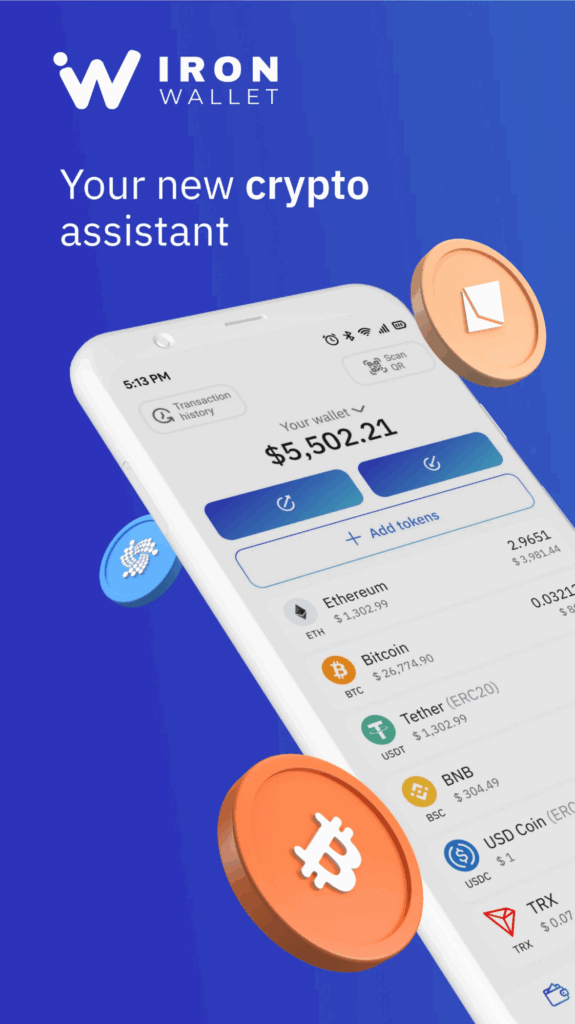
Users who value quick cryptocurrency interaction and privacy preservation should consider IronWallet—a mobile non-custodial crypto wallet.
It requires no verification, collects no personal data, and supports work with major networks, including Bitcoin, Ethereum, Tron, Solana, and TON.
The wallet features a user-friendly interface with token sorting options and portfolio currency display settings. It supports sending and buying cryptocurrency, as well as card withdrawals.
An additional option is an NFC card for backup seed phrase storage. This solution can be useful if you lose access to your device. The app is translated into 21 languages, operates stably, and support responds via chat 24/7.
How We Compile Our Crypto Wallet Ranking
Top Crypto Wallets of 2025, According to Our Editorial Team
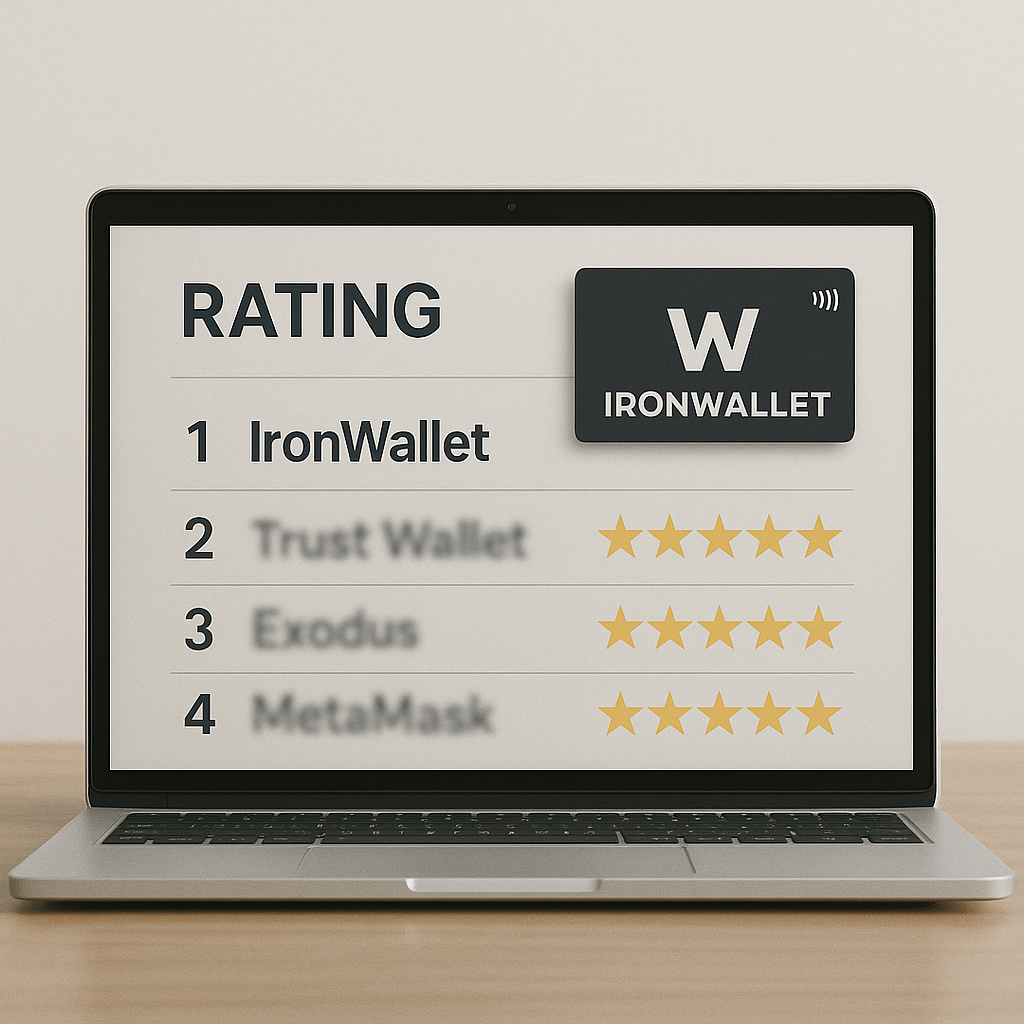
We compiled this rating based on a combination of practical significance, accessibility, and functionality for users—especially considering the realities of the Russian market.
The list includes both non-custodial and custodial wallets, hardware and software solutions, multi- and single-currency options, as well as those integrated with DeFi, NFTs, and P2P exchange. We consider how easy a wallet is to use, how secure it is, and whether it’s suitable for storage, trading, staking, or Web3 interaction. Additionally, not only technological sophistication matters, but also user trust.